What are the biggest barriers to cross-team security communication?
Mismatched jargon, silos and clashing priorities block security teams from being heard. Discover practical ways to fix cross-team communication.

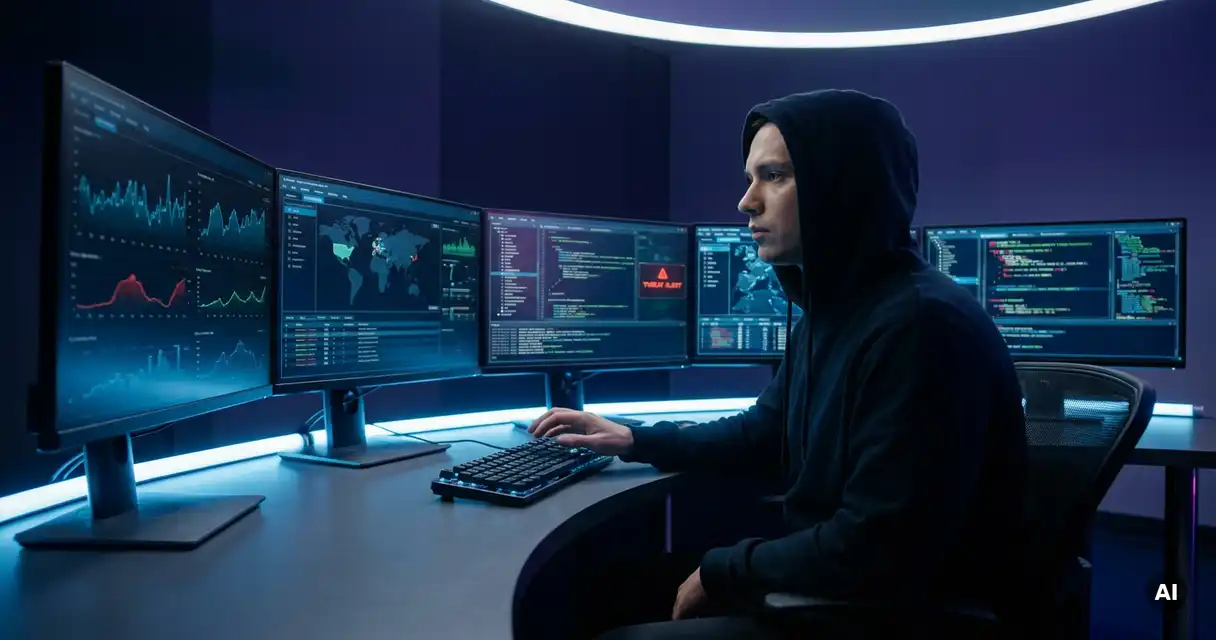
During a high-volume threat event, a SOC analyst prioritizes alerts by combining severity scoring, asset criticality, and contextual threat intelligence to separate genuine incidents from noise. The goal is to direct limited analyst time toward the threats most likely to cause real harm, rather than chasing every notification the SIEM generates. The questions below unpack the specific frameworks, tools, and judgment calls that make effective alert prioritization possible under pressure.
SOC analysts primarily use severity scoring frameworks such as CVSS (Common Vulnerability Scoring System), the MITRE ATT&CK matrix, and risk-based triage models to rank alert severity. These frameworks give analysts a structured, repeatable way to assess how dangerous an alert is, how likely exploitation is, and how urgently a response is needed, rather than relying on instinct alone.
The MITRE ATT&CK framework is particularly valuable during high-volume events because it maps observed behaviors to known adversary tactics and techniques. When an alert aligns with a tactic associated with lateral movement or credential access, for example, analysts can immediately understand the potential threat chain and elevate its priority accordingly.
Risk-based triage models layer additional context on top of raw severity scores. Rather than treating every critical-rated alert equally, these models factor in:
Using these frameworks together allows analysts to move from a flat list of alerts to a prioritized queue where the most dangerous, most actionable items sit at the top. During a high-volume event, that structure is not a luxury; it is the mechanism that prevents critical incidents from being buried under low-severity noise.
Asset criticality directly changes alert priority by adding business context to technical severity. An alert on a domain controller or a payment processing server carries far greater urgency than the same alert on a test workstation, even if the raw threat score is identical. Asset criticality scoring ensures that the business impact of a potential compromise shapes the analyst’s response, not just the technical characteristics of the threat.
Most mature SOC teams maintain an asset inventory that assigns criticality tiers to systems based on factors such as the data they hold, their role in business operations, and the downstream consequences of their compromise. When an alert fires, the SIEM or SOAR platform automatically cross-references the affected asset against this inventory and adjusts the alert’s priority accordingly.
This approach has a significant practical effect during high-volume events. Without asset criticality weighting, analysts face a queue where a minor misconfiguration on a critical server competes for attention alongside a serious exploit attempt on a decommissioned test system. With criticality scoring built in, the queue reflects real-world risk rather than theoretical severity, and analysts can make faster, better-informed triage decisions.
Alert fatigue is the desensitization that occurs when SOC analysts are exposed to such a high volume of alerts that they begin to process them less carefully, dismiss them more quickly, or miss genuine threats entirely. It is one of the most serious operational risks in a security operations center, and it directly degrades the quality of triage decisions during high-volume events.
The mechanism is straightforward: when analysts routinely see hundreds or thousands of alerts per shift, the majority of which turn out to be false positives, they develop a pattern of rapid dismissal. This is a rational cognitive response to information overload, but it creates dangerous blind spots. A real attack that arrives as a familiar-looking alert pattern can slip through precisely because it resembles the noise analysts have learned to ignore.
Alert fatigue affects triage decisions in several specific ways:
Addressing alert fatigue requires both technical and operational changes. On the technical side, tuning detection rules to reduce false positives and implementing alert deduplication reduces the raw volume. On the operational side, rotating analysts, setting realistic workload limits, and building clear escalation paths help maintain the cognitive sharpness that effective threat triage demands.
SOC teams use Security Orchestration, Automation, and Response (SOAR) platforms to manage alert volume spikes by automating repetitive triage tasks, enriching alerts with contextual data, and executing predefined response playbooks without requiring analyst intervention for every notification. Automation does not replace analyst judgment; it removes the low-value work that consumes time during high-volume events.
When a volume spike occurs, automated workflows can handle several tasks simultaneously that would otherwise create a bottleneck:
The practical result is that automation handles the high-frequency, low-complexity work, freeing analysts to focus their attention on the alerts that genuinely require human judgment. During a high-volume incident response scenario, this division of labor is what keeps a SOC team functional rather than overwhelmed.
A SOC analyst should escalate an alert when it involves a confirmed or likely compromise of a critical asset, when the scope of the incident exceeds their authorization level, when the attack technique is novel or unfamiliar, or when the required response would have significant operational impact. Independent handling is appropriate for well-understood, lower-severity alerts that fall within established playbooks.
The escalation decision is one of the most consequential judgment calls in threat triage, and getting it wrong in either direction creates problems. Under-escalating delays the involvement of senior analysts or incident response teams when speed matters most. Over-escalating creates bottlenecks and erodes the confidence of senior staff in the team’s ability to handle routine work.
Clear escalation criteria, documented in playbooks and reviewed regularly, remove ambiguity from this decision. When analysts know precisely where the line is, they spend less time deliberating and more time acting.
Threat intelligence plays a direct role in real-time alert prioritization by providing context that transforms a raw alert into a meaningful signal. When an alert includes an IP address, domain, or file hash that matches a known threat actor’s infrastructure, analysts can immediately elevate its priority and apply relevant response procedures rather than starting their investigation from scratch.
During a high-volume threat event, the speed advantage that threat intelligence provides is significant. Without it, analysts must investigate each alert on its own merits, which is time-consuming. With integrated threat intelligence feeds, the SIEM or SOAR platform can automatically flag alerts that correlate with active campaigns, known malware families, or threat actors known to target the organization’s sector.
Threat intelligence contributes to alert prioritization in several practical ways:
The quality of threat intelligence matters as much as its presence. Intelligence that is timely, relevant, and properly integrated into the SOC’s tooling adds genuine prioritization value. Generic or outdated feeds can add noise rather than clarity, which is why SOC teams invest in curating their intelligence sources carefully.
Cybersecurity leaders build SOC teams capable of handling high-volume events by combining the right team structure, clear operational processes, well-tuned tooling, and analysts who bring both technical depth and sound judgment under pressure. No single element is sufficient on its own; effective performance during a surge event is the product of how all these components work together.
From a structural standpoint, effective SOC teams operate with tiered analyst roles that match task complexity to analyst experience. Tier 1 analysts handle initial triage and alert processing, tier 2 analysts investigate escalated incidents, and tier 3 analysts or incident responders manage complex, high-severity events. This structure ensures that analyst capacity is allocated efficiently rather than having senior personnel handling routine notifications.
Process design is equally important. Teams that perform well under pressure have documented playbooks for their most common alert types, clear escalation criteria, and regular tabletop exercises that simulate high-volume scenarios. When a real surge event occurs, analysts are not making decisions about process in the moment; they are executing a framework they have already internalized.
Hiring decisions shape long-term SOC resilience significantly. Leaders who prioritize analysts with strong investigative instincts, the ability to work methodically under stress, and genuine curiosity about adversary behavior tend to build teams that adapt well when events do not follow the playbook. Technical skills can be developed over time; the judgment and composure that high-volume incident response demands are harder to build from scratch.
Tooling and automation, discussed earlier in this article, reduce the cognitive load on analysts during volume spikes. Leaders who invest in alert enrichment, deduplication, and automated response capabilities are effectively multiplying their team’s capacity without adding headcount. During a high-volume event, that multiplier can be the difference between a contained incident and a prolonged breach.
Building a SOC team that performs under pressure starts with having the right people in the right roles. That is where we come in. At Iceberg, we specialize in connecting organizations with elite cybersecurity professionals across the full range of SOC functions, from experienced threat analysts to senior security operations leaders.
If you are building or scaling a security operations team and want to move faster without compromising on quality, get in touch with us to start the conversation.