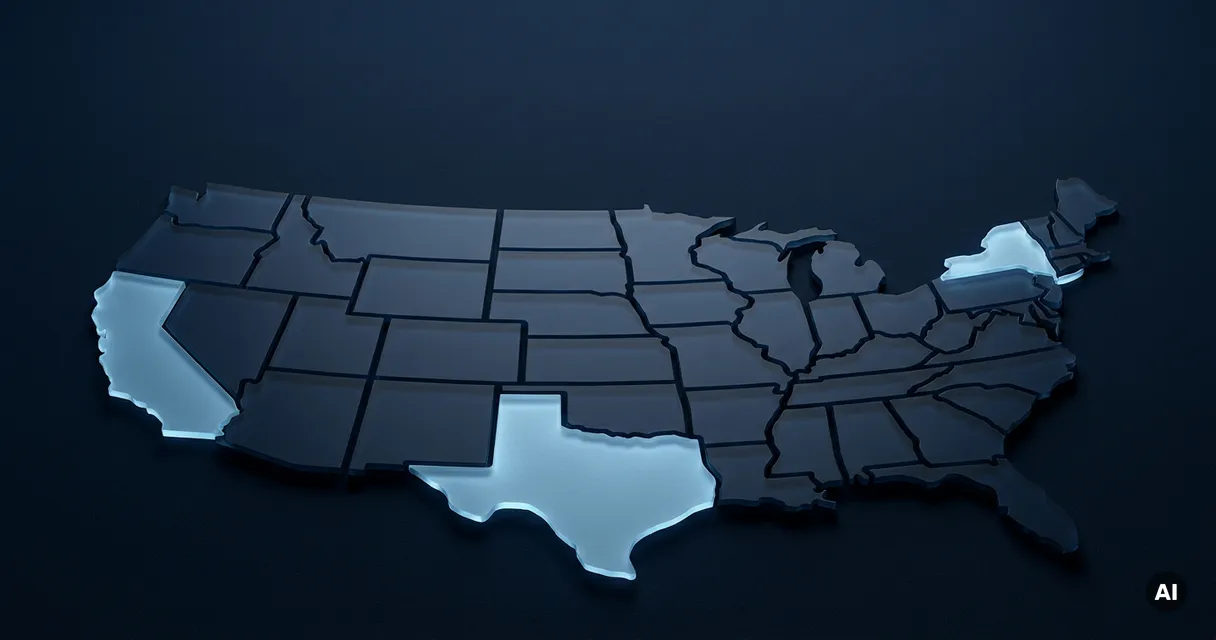
What states have the strictest data privacy laws for businesses in 2026?
California leads, but five states now impose the strictest data privacy laws on US businesses in 2026.

US companies recover after a ransomware attack on critical systems by executing a structured incident response plan that isolates affected systems, assesses the damage, restores data from clean backups, and rebuilds compromised infrastructure. Recovery is rarely instant. The timeline, cost, and outcome depend heavily on how prepared the organization was before the attack and the quality of the team managing the response. This article walks through the key questions every US company should be able to answer before an attack ever happens.
The immediate priority after a ransomware attack is containment. US companies must isolate infected systems from the network as quickly as possible to stop the ransomware from spreading to additional endpoints, servers, or cloud environments. From there, the focus shifts to assessment, notification, and activating the incident response plan.
A well-prepared organization will move through the following steps in rapid succession:
The speed and discipline of these early hours define the entire recovery trajectory. Companies that have rehearsed their ransomware response plan through tabletop exercises consistently fare better than those improvising under pressure.
The consensus among cybersecurity professionals and US law enforcement is that companies should not pay the ransom. Paying does not guarantee data recovery, may violate sanctions laws if the threat actor is on a government watchlist, and signals to attackers that the organization is willing to pay, making it a target for future attacks.
That said, the decision is rarely straightforward. Companies managing critical infrastructure, healthcare systems, or time-sensitive operations sometimes face scenarios where paying feels like the only viable path to restoring services quickly. Before making any decision, legal counsel and a specialized incident response firm should be consulted.
Paying the ransom funds criminal enterprises and contributes to a broader ecosystem of ransomware attacks against US businesses. It also does not address the root vulnerability that allowed the attacker in. Companies that pay often find themselves attacked again within months because the underlying weakness was never resolved.
In situations where backups are corrupted, recovery timelines stretch into weeks, and operational downtime carries severe consequences, some organizations weigh payment as a business continuity decision rather than a security one. If payment is considered, it must be handled through legal and compliance channels to avoid violating the Office of Foreign Assets Control (OFAC) regulations, which prohibit payments to sanctioned entities.
Recovering critical systems after a ransomware attack typically takes anywhere from several days to several weeks, depending on the scope of the attack, the quality of existing backups, and the expertise of the recovery team. Organizations with mature backup infrastructure and a tested recovery plan recover significantly faster than those without.
The recovery timeline is shaped by several factors:
Even after systems are technically restored, full operational recovery, including validating data integrity, rebuilding trust with customers, and completing post-incident audits, can extend the recovery period considerably beyond the initial technical fix.
Cyber insurance plays a significant role in ransomware recovery by covering costs that can otherwise be financially devastating, including incident response fees, legal counsel, regulatory fines, business interruption losses, and in some policies, ransom payments. However, coverage varies widely between policies, and insurers have tightened requirements considerably in recent years.
US companies should understand what their policy actually covers before an incident occurs. Common areas of coverage include:
Insurers now routinely require organizations to demonstrate a baseline level of security controls before issuing or renewing a policy. Companies without multi-factor authentication, endpoint detection, or tested backup procedures may find their coverage denied or their premiums prohibitively high. Cyber insurance is a financial safety net, not a substitute for a strong ransomware recovery plan.
Companies restore data without paying the ransom primarily by recovering from clean, isolated backups. This is the most reliable and legally sound path to data recovery after a ransomware attack on critical systems. In some cases, free decryption tools are also available for specific ransomware variants through resources like the No More Ransom project.
Successful data restoration without payment depends on the groundwork laid before the attack:
The gold standard for ransomware resilience is the 3-2-1 backup rule: three copies of data, on two different media types, with one copy stored offline or air-gapped. Offline backups are inaccessible to ransomware because they are not connected to the network during an attack. Companies that maintain this discipline can restore systems without negotiating with attackers.
Law enforcement agencies, including the FBI and international partners, have periodically obtained decryption keys from dismantled ransomware operations. Organizations should check whether a decryption tool exists for the specific variant they have been hit with before concluding that payment or full restoration from backup is the only path forward. The No More Ransom project, supported by Europol and multiple cybersecurity vendors, maintains a regularly updated library of free decryption tools.
Effective ransomware recovery requires a specific set of cybersecurity professionals who can lead containment, forensic investigation, system restoration, and long-term hardening. The right talent makes the difference between a recovery measured in days and one measured in months. Many US companies discover their talent gaps only after an attack has already begun.
The core roles involved in a ransomware recovery effort include:
For many organizations, the challenge is not knowing which roles are needed but having them filled before an attack occurs. Ransomware recovery is not the time to begin hiring. Companies that have invested in building out their security teams, or have established relationships with trusted incident response partners, are far better positioned to manage a cyber attack recovery effectively.
Ransomware recovery depends on having the right people in place before an attack occurs. We specialize in placing elite cybersecurity professionals who lead incident response, forensic investigation, and long-term security hardening for organizations across the US and beyond.
Here is how we support your ransomware preparedness through talent:
If your organization needs to strengthen its cybersecurity team before the next threat arrives, book your Vacancy Health Check and let us help you close the gap.