iceberg logo
iceberg logo

How CISOs Are Restructuring Teams to Address AI-Powered Cyber Threats

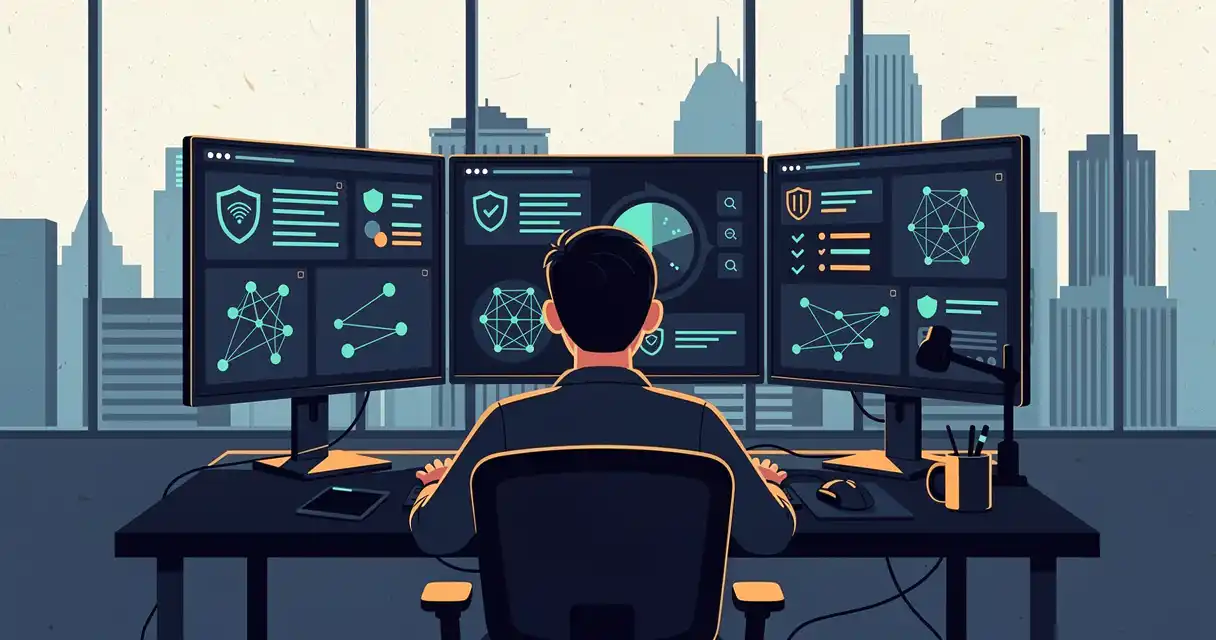
Digital network visualization with glowing blue circuit pathways forming defensive shield structures and security barriers

The cybersecurity threat landscape has fundamentally changed. Traditional security teams built to handle conventional attacks now face adversaries armed with artificial intelligence and machine learning capabilities. These AI-powered threats operate at speeds and scales that overwhelm standard security protocols, making many established defence strategies obsolete.

CISOs across industries are responding by completely restructuring their teams. They’re creating new roles, redefining responsibilities, and building capabilities that didn’t exist five years ago. This transformation isn’t optional anymore. It’s the difference between staying ahead of threats and becoming another breach statistic.

This guide examines how forward-thinking security leaders are rebuilding their teams for the AI era. You’ll discover the specific roles being created, the skills that matter most, and practical steps for restructuring your own security organisation.

Why traditional security teams can’t handle AI-powered attacks

Most cybersecurity teams were designed for a different era, creating fundamental mismatches between defensive capabilities and modern threat realities. Several critical limitations expose organisations to AI-powered attacks:

  • Speed disparity: Traditional security analysts review approximately 50 alerts per day, while AI systems can generate and execute 50 attack scenarios per minute
  • Detection methodology gaps: Legacy signature-based detection and rule-based systems cannot adapt to AI threats that modify their behaviour in real-time
  • Skills shortage: Most security professionals understand network protocols and malware analysis but lack knowledge of machine learning algorithms and adversarial AI techniques
  • Response time limitations: Human-driven teams typically detect sophisticated attacks within days or weeks, while AI-powered attacks complete objectives within hours or minutes
  • Organisational silos: Traditional teams organised around specific technologies create communication gaps that AI threats exploit seamlessly
  • Tool inadequacy: Legacy SIEM platforms and static detection systems generate false positives when AI attacks deliberately trigger multiple alerts to mask real objectives

These limitations create a mathematical reality that human reaction speeds simply cannot match machine execution speeds. The fundamental architecture of traditional security operations—built for predictable, human-driven attacks—becomes a liability when facing adaptive, intelligent adversaries. This mismatch forces organisations to completely rethink their defensive strategies and team structures to remain viable in the AI threat era.

New roles CISOs are creating to combat AI threats

Forward-thinking CISOs are creating entirely new positions that require hybrid skills combining traditional security expertise with advanced technical capabilities. These roles address specific aspects of AI threat defense:

  • AI Security Specialists: Bridge data science and cybersecurity by designing AI-resistant systems, identifying algorithmic vulnerabilities, and developing countermeasures for adversarial attacks
  • Machine Learning Threat Analysts: Focus specifically on threats using or targeting AI systems, reverse-engineering AI-powered malware and analysing adversarial examples
  • Automated Response Engineers: Build systems responding to threats at machine speed through orchestration platforms and automated containment procedures requiring no human intervention
  • AI Ethics and Governance Officers: Ensure defensive AI systems operate within legal boundaries while developing policies for AI deployment and managing compliance requirements
  • Adversarial AI Researchers: Study emerging attack techniques, test defensive systems against novel threats, and collaborate with academic institutions to anticipate threat evolution

These positions integrate strategically with existing teams rather than replacing traditional roles. The new specialists provide expertise during AI-related incidents while enhancing overall team capabilities through knowledge transfer and collaborative problem-solving. This integration model allows organisations to build AI defense capabilities while maintaining operational continuity and leveraging existing institutional knowledge.

How to restructure your security team for AI threat readiness

Restructuring your security team requires a systematic approach balancing immediate operational needs with long-term capability development. The following strategic steps ensure successful transformation:

  • Conduct comprehensive skills assessment: Audit existing staff for programming experience, statistical knowledge, and data analysis capabilities to identify candidates for AI security training
  • Create hybrid roles first: Transform senior analysts into AI-aware positions through targeted training rather than immediately hiring new specialists
  • Implement phased hiring strategy: Start with one AI Security Specialist, add Machine Learning Threat Analysts as literacy improves, then introduce Automated Response Engineers once requirements are clear
  • Restructure communication flows: Establish joint working groups crossing traditional boundaries since AI threats don’t respect departmental divisions
  • Develop clear escalation procedures: Define when incidents require AI expertise and document decision trees helping analysts identify AI-related indicators
  • Budget for continuous learning: Allocate resources for conferences, training courses, and research subscriptions keeping teams current with rapidly evolving threats
  • Establish academic partnerships: Connect with universities having cybersecurity programs with AI focuses for research access and recruitment pipelines

This structured approach ensures your organisation builds AI defense capabilities without disrupting critical security operations. The phased implementation allows teams to adapt gradually while maintaining effectiveness against traditional threats during the transition period.

Skills and expertise your restructured team needs most

Building an AI-ready security team requires specific technical competencies enabling understanding, detection, and response to sophisticated AI-powered threats. The following capabilities form the foundation for effective AI security operations:

  • Programming proficiency: Strong Python skills for data analysis and automation, R knowledge for statistical analysis, and SQL expertise for complex log analysis across large datasets
  • Machine learning understanding: Practical experience with supervised/unsupervised learning algorithms, neural network architectures, and model training processes including adversarial attack recognition
  • Advanced data analysis: Experience with visualisation tools, statistical analysis methods, and large-scale data processing for pattern recognition and anomaly detection
  • Cloud security expertise: Understanding of containerised applications, serverless computing, and cloud-native security tools where modern AI systems operate
  • AI-specific threat intelligence: Ability to identify AI-powered attacks, analyse adversarial techniques, and develop appropriate countermeasures
  • Technical communication skills: Capability to translate algorithmic risks into business impact assessments and justify AI security investments to leadership
  • Project management abilities: Coordination of complex initiatives spanning multiple teams and technical domains with research and proof-of-concept components
  • Continuous learning mindset: Commitment to staying current with academic research, industry developments, and emerging defensive technologies

The cybersecurity talent shortage makes finding professionals with these combined skills particularly challenging. Many successful organisations focus on developing existing team members rather than exclusively hiring complete AI security specialists, building internal expertise while maintaining team cohesion and institutional knowledge essential for effective security operations.

Building an AI-ready security team represents one of the most important investments you can make in your organisation’s future security posture. The threat landscape will only become more sophisticated, and teams that adapt now will have significant advantages over those that wait.

We understand the complexity of finding cybersecurity professionals with AI expertise. Our global network includes specialists who combine traditional security knowledge with advanced AI capabilities, helping organisations build the teams they need to address tomorrow’s threats today.


Share this post

Related Posts

JOIN OUR NETWORK

Tap Into Our Global Talent Pool

When you partner with Iceberg, you gain access to an unmatched network of 120,000 candidates and 66,000 LinkedIn followers. Our passion for networking allows us to source and place exceptional talent faster than anyone else. Join our community and gain a competitive edge in hiring.
Pin
Pin
Pin
Pin
Pin
Pin